Walk N Health
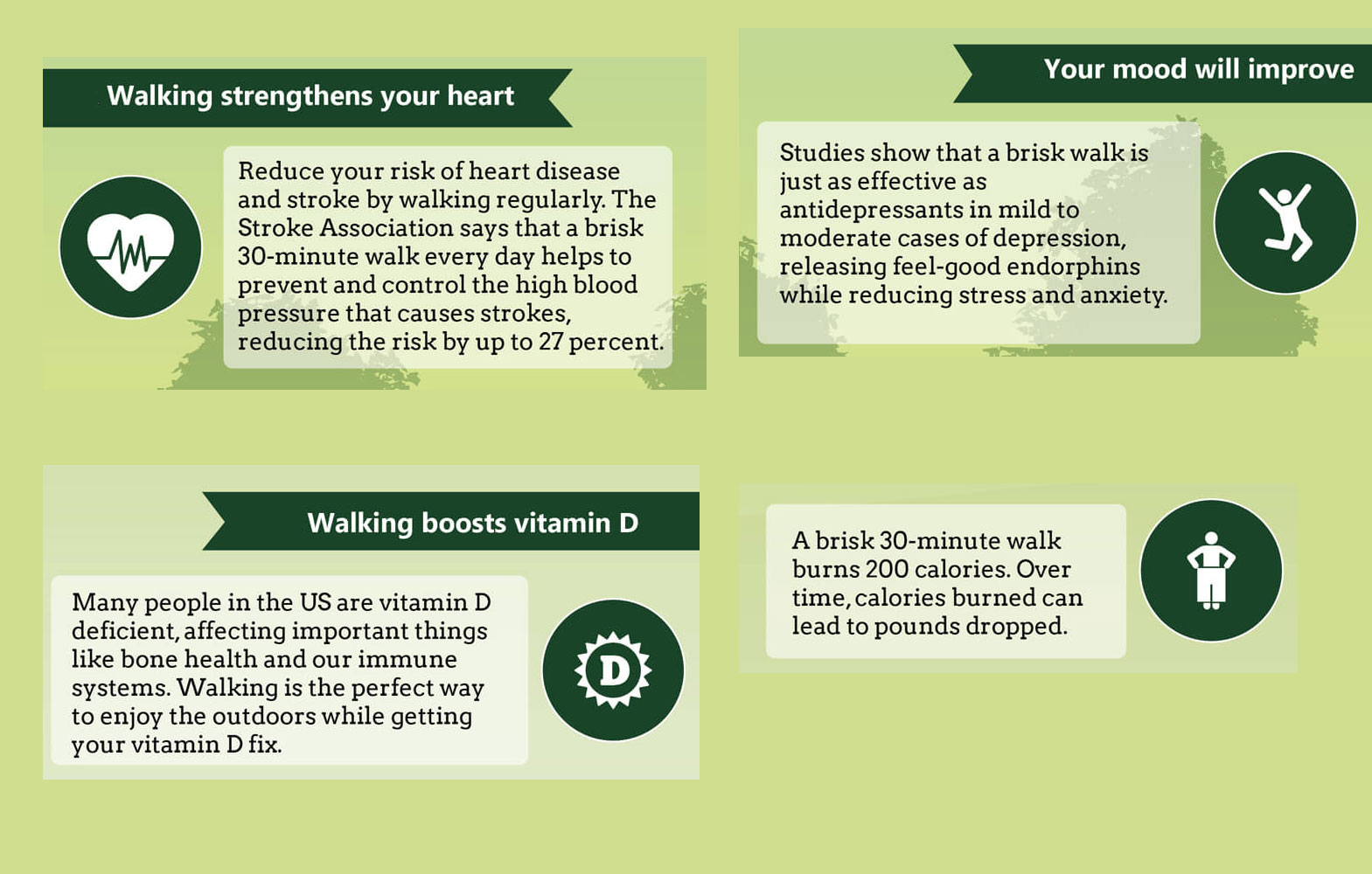
According to the Centers for Disease Control and Prevention (CDC), walking helps your body burn more calories. A 154-pound person burns 280 calories an hour walking at a moderate pace (3.5 miles per hour) and 460 calories an hour walking at a vigorous pace—4.5 miles per hour (MPH)
Summarised from published guidance
Updated September 2026
Walk and Stay Healthy

- Walking is already part of your day, and turning it into a form of exercise that helps with weight management doesn’t have to be complicated. You can even break up your walks into 10-minute increments if time is limited.
- Studies have shown that a regular walking program can help you melt away some extra pounds. Ideally, though, the increase in exercise should be paired with healthier eating habits for weight loss.
- When losing weight, more physical activity increases the number of calories your body uses for energy. Using calories through physical activity, combined with reducing the calories you eat, creates a calorie deficit that results in weight loss.
- Most weight loss occurs from decreasing caloric intake. However, evidence shows the only way to maintain weight loss is to be engaged in regular physical activity.
- Most importantly, physical activity reduces risks of cardiovascular disease and diabetes beyond that produced by weight reduction alone.